

Railroad Stocks – Analysis 02/15/2020

Every one of the six railroad stocks are at or above their all-time highs.
Railroad Stocks – Analysis 02/15/2020 Read More »
Value investing, in its simplest terms, means buy low, sell high, the universal primary tenet of business. Value investing is defined as a systematic process of purchasing high-quality stocks at an undervalued market price, quantified by intrinsic value and justified through financial analysis, then selling the stock promptly upon market price recovery.
This site teaches the investor about the four core principles of value investing. There are various in-depth sections, including tutorials about intrinsic value and security analysis.
Furthermore, there is a membership-only section that utilizes a Value Investment Fund with eight pools of different industries and 60-plus potential investments that are monitored regularly. This Fund has a six-year history of 25% annualized returns.
Every one of the six railroad stocks are at or above their all-time highs.
Railroad Stocks – Analysis 02/15/2020 Read More »

During the last 30 days, the fund held 13.52375 shares (original investment of $2,500) and sold them on 01/17/2020 at 9:40 AM when the price in the market hit the target under the value investment principle at $207.17.
Railroad Fund – Status on 01/31/2020 Read More »

It’s the end of the quarter and time to report on the railroad fund.
Railroad Fund – Status as of 12/31/19 Read More »
Union Pacific’s stock carries the highest price to book ratio among the six Class I Railways. It is about a 1.43 times factor over the next best price to book ratio of CSX at 4.73.
Union Pacific – Buy/Sell Model Read More »
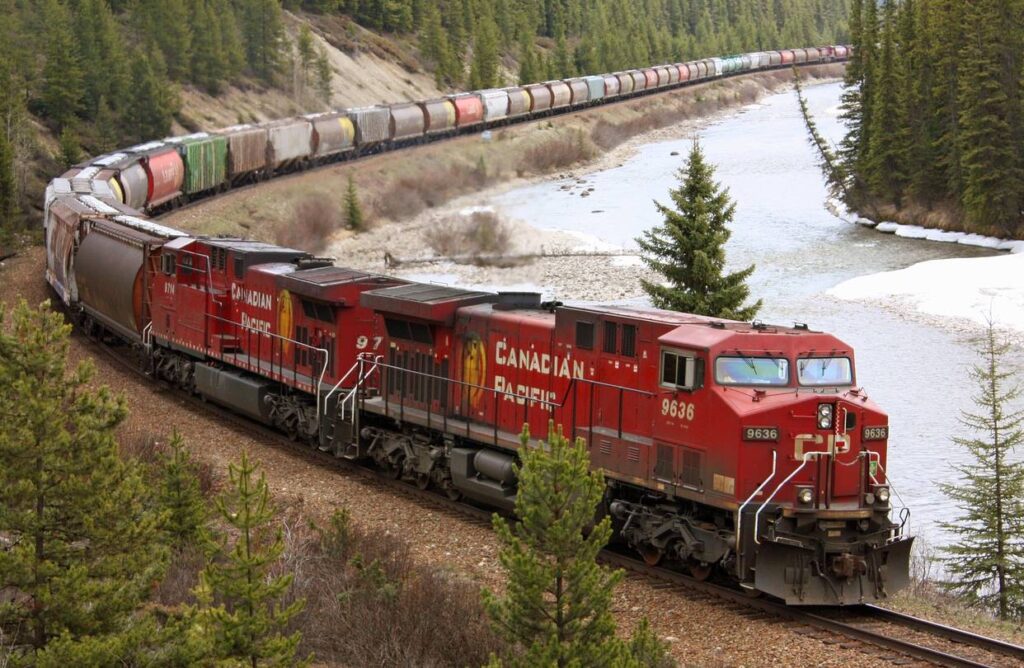
Today is November 15, 2019 and Canadian Pacific Railroad recovered in accordance with my railroad fund investment model to $241.47 per share.
Canadian Pacific Railroad – Sold Stock at $241.47 Read More »

With stock investing, one of the valuation ratios used is the price to book ratio. It identifies the spread between book value and market value for a share of stock.
High Price to Book Ratios – Proper Interpretation and Evaluation Read More »

This is purely a historical record of the investment fund for railroad stocks based on the value investing concept developed using business ratios.
Railroad Fund – Status as of 11/06/19 Read More »
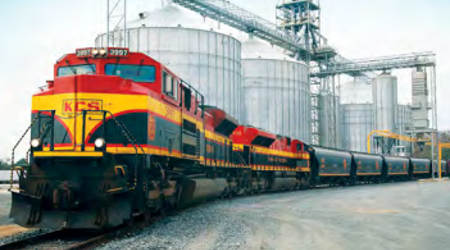
Railroad stocks are solid and steady investments. There is limited downside risk and adequate historical data to illustrate buy and sell points for an investor.
Railroad Stock – Discovering Opportunities Read More »

These six are behemoths when it comes to transportation. All have revenues greater than $2.5 Billion per year and hold at least $4 Billion in fixed assets. The key to this investment is the asset allocation model.
Railroad Companies – A Solid and Steady Investment Read More »

The transportation sector of the United States economy is composed of nine industrial groups. One particular group moves more volume of tonnage based on ton miles than any other form of transportation – Railroads. In accordance with the Federal Department of Transportation, railroads move 39.5% of all freight in the US (based on ton miles which is the length freight travels).
Railroad Stock Investments – The Standard of Measurement to Buy and Sell Railway Stock Read More »